
Gas Safety at Home: What Every Perth Homeowner Needs to Know
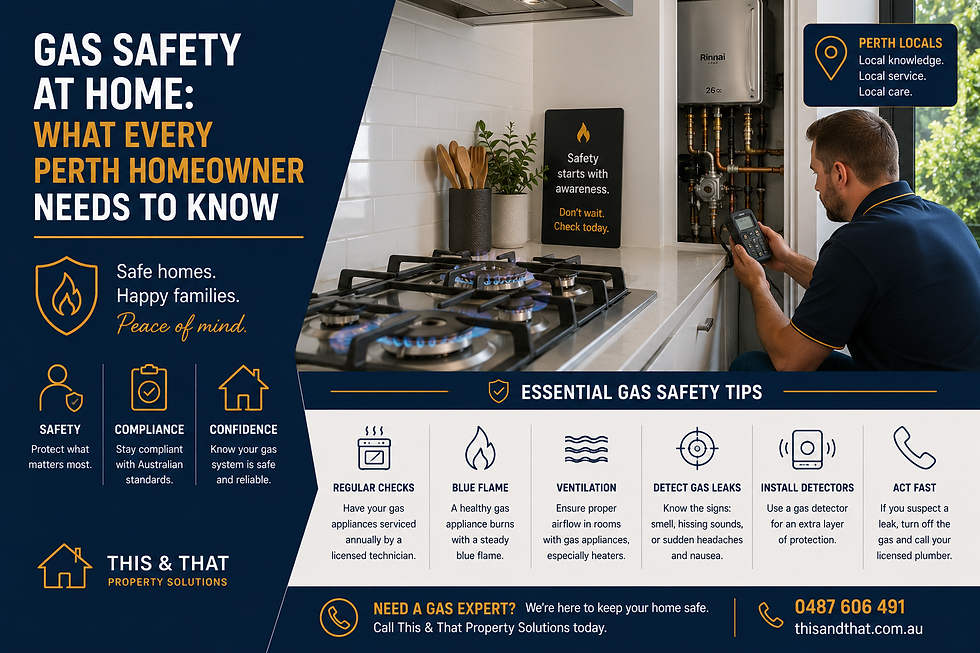
Natural gas powers cooktops, hot water systems, space heaters and outdoor BBQ points in hundreds of thousands of Perth homes. When it's installed correctly by a licensed gas fitter and maintained properly, gas is safe, efficient and convenient. The problems arise when work is done without the right licence, appliances are left unserviced for too long or warning signs are ignored because they don't seem urgent.
Gas-related incidents are rare precisely because the licensing and compliance system in WA is strict. Understanding what that system requires ,and what the warning signs of a gas problem look like, is worth knowing as a homeowner.
Signs of a gas leak
The most important thing to know about a gas leak is what it smells like. Natural gas itself is odourless, but the gas distributor adds a chemical called mercaptan to give it a distinctive smell, often described as rotten eggs or sulphur. If you smell this anywhere in or around your home, treat it seriously.
Other signs of a gas leak include:
A hissing sound near a gas appliance, meter or pipe
Dead or dying plants in an area where a gas line runs underground, which can indicate a slow leak into the soil
Bubbles appearing in standing water near a gas pipe
A pilot light that keeps going out repeatedly
Unexplained increases in your gas bill without a change in usage habits
Physical symptoms including headaches, dizziness or nausea when indoors that improve when you go outside, which can indicate carbon monoxide exposure from a poorly performing gas appliance
What to do if you suspect a gas leak
Act quickly and don't assume it will sort itself out.
Do not turn any light switches on or off. Do not use your phone inside the building. Do not start any vehicles in an attached garage. Leave the building immediately, leaving doors open as you go to allow any accumulated gas to disperse.
Once you are outside and away from the building, call Atco Gas Australia on 13 13 52. Atco manages the natural gas distribution network across Perth and operates an around-the-clock emergency line. If you believe there is immediate danger, call 000 first.
Do not re-enter the property until Atco or emergency services have confirmed it is safe to do so.
Once the immediate situation is resolved, engage a licensed gas fitter to identify and repair the source of the leak before reconnecting gas to the property.
Gas work that must be done by a licensed professional
In Western Australia, it is a legal offence to carry out gas fitting work without the appropriate licence. This is not a technicality — it exists because gas work done incorrectly is genuinely dangerous.
Under the Gas Standards Act 1972 (WA) and the Gas Standards (Gasfitting and Consumer Gas Installations) Regulations 1999, gas fitting work must be carried out by a licensed gas fitter registered with the Building and Energy division of DMIRS.
Gas work that requires a licensed professional includes:
Installing or relocating a gas cooktop, oven or range
Connecting or replacing a gas hot water system
Installing or servicing a gas space heater
Adding an outdoor gas BBQ point or any new gas outlet
Any work on gas meters, regulators or pipework
Commissioning a gas appliance after installation
You can verify whether a gas fitter is licensed through the Building and Energy public register. Ask to see the licence before any work starts, not after.
After completing gas work, the gas fitter is required to issue a Certificate of Compliance confirming the installation meets the required standards. Keep this document — it's important for insurance purposes and if you ever sell the property.
Carbon monoxide: the invisible risk
Carbon monoxide is produced when gas appliances don't burn fuel completely. It's colourless, odourless and potentially fatal at high concentrations. Unlike a gas leak, there's no smell to alert you.
The most common source of carbon monoxide risk in Perth homes is unflued gas space heaters. These heaters burn gas in the living space and release combustion products directly into the room rather than venting them outside. They are legal in WA when used correctly, but the Department of Health WA recommends ensuring adequate ventilation when using them and having them serviced regularly.
Ducted gas heating systems and gas fireplaces that use a flue or vent to expel combustion gases are lower risk provided the flue is intact and unobstructed, but they should still be serviced periodically.
A carbon monoxide detector is a low-cost addition to any home with gas appliances. The Australian Competition and Consumer Commission (ACCC) has published safety guidance on carbon monoxide risks from gas appliances, including what to look for and when to replace an appliance.
How often should gas appliances be serviced?
There is no single mandatory service interval for all gas appliances in WA, but general industry guidance suggests:
Gas hot water systems: every 2 to 5 years depending on the type and age
Gas space heaters: every 2 years, particularly unflued heaters
Gas cooktops and ovens: every 2 to 3 years for commercial or heavy use, less frequently for light residential use
Gas ducted heating: every 2 years
Appliances that are showing signs of poor performance, unusual flame colour (orange or yellow rather than blue), unusual smells or sounds should be serviced or inspected sooner regardless of the last service date.
A licensed gas fitter can carry out appliance servicing and will identify any components that need replacement before they become a safety issue.
Gas and investment properties
Landlords with gas appliances in rental properties have specific obligations. Under the Residential Tenancies Act 1987 (WA), landlords are required to maintain the premises in a reasonable state of repair, which includes gas appliances and installations. The Consumer Protection division of DMIRS provides guidance on what this means in practice.
A gas appliance that is known to be faulty and is not repaired creates both a safety risk and a legal liability. Keeping records of gas appliance servicing is good practice for any landlord with gas in their investment property.
New gas connections and upgrades
If you're adding a gas BBQ point, converting from electric to gas cooking, or installing gas for the first time in a property, the process involves both a licensed gas fitter for the internal work and Atco Gas Australia for the network connection if required.
Atco manages the gas distribution infrastructure across Perth and can advise on whether a new connection is available at your property, what it involves and what the associated costs are. A licensed gas fitter coordinates the internal work and ensures the installation is compliant before gas is connected.
This & That works with licensed gas fitters across Perth for installation, repair and appliance servicing. Visit thisandthat.com.au to find out more, request a quote here or call 0487 606 491 to talk through what you need.


